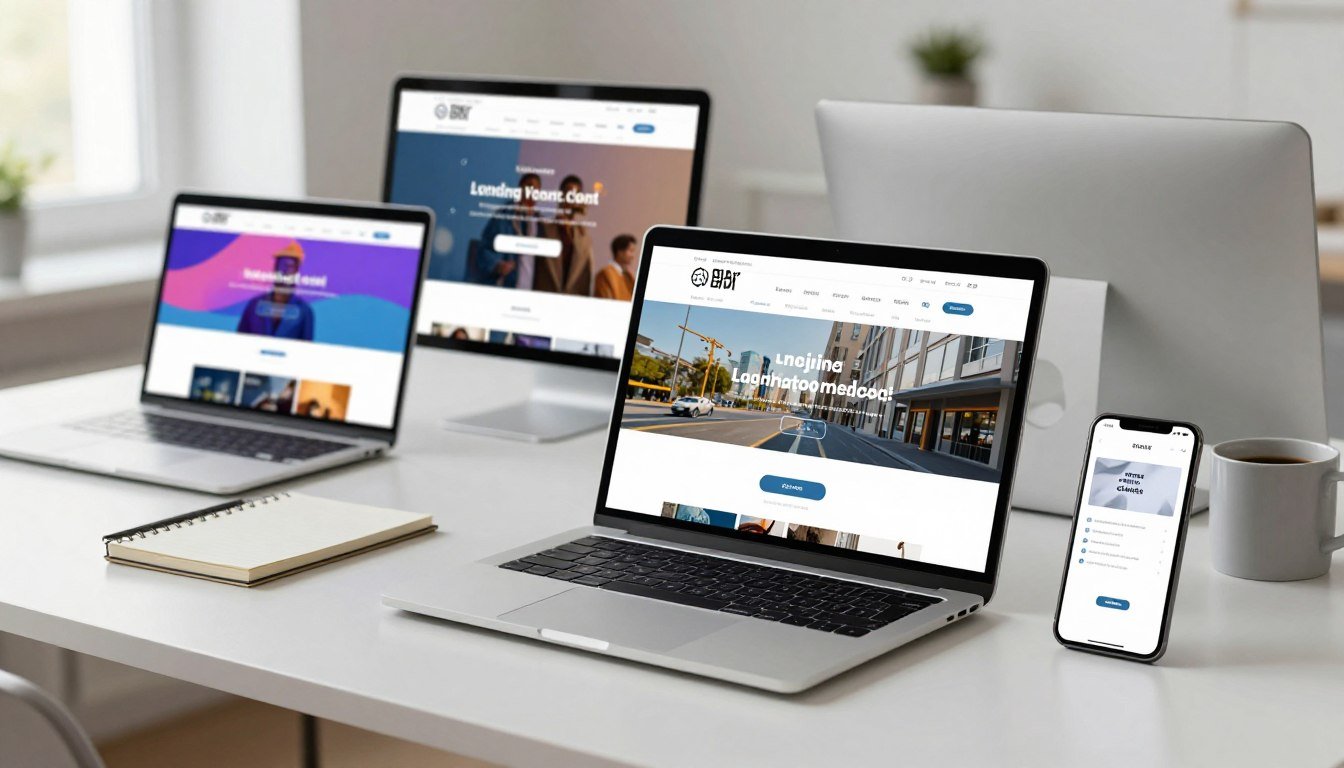
What if one focused page could turn a click into a client more often than a cluttered site? We see this every day working with law firms, clinics, and service providers across the United States.
A landing pages is a single-purpose destination built for one call to action. It strips away extra links and distractions so the offer matches the visitor’s intent and conversion rates rise.
We use data-driven tests across Google Ads, Meta Ads, and SEO to lower acquisition costs and boost qualified leads. Each element — headline, benefits, proof, and a quick form or button — exists to move prospects toward action.
If you want to see how focused design and messaging improve results, learn more on our dedicated resource page at X3 Agency landing pages overview or call us at +1 (645) 201-2398.
What is a Landing Page, really?
A landing page standalone serves one job: convert a click into the desired action. We define it as a focused, standalone web page built for a single call to action, like booking a consult or requesting a quote.
This campaign page differs from a normal site section because it removes menus and extra links. Fewer choices reduce confusion and make it easier for visitors to complete the desired action.
Great pages are built around the target audience. We match headline, offer, and imagery to the visitor’s intent from Google Ads, Meta Ads, email, or social media. That message-match confirms people are in the right place.
For service businesses, clarity wins. By keeping the web page outside evergreen navigation and focused on one CTA, we eliminate the paradox of choice and lift conversion rates. Next, we’ll show types of landing pages, key elements, and how to create landing assets that work with your marketing campaigns.
Landing Page vs. Homepage: Why focus wins
When clicks mean consultations, a single-purpose page keeps visitors moving to action. Homepages must do many jobs: brand storytelling, navigation, careers, blogs, and general discovery. That breadth makes them great for exploration but weak for capturing one conversion.
We measure where visitors leak away. Multiple menus and CTAs create routes off the conversion path. A page standalone web for a campaign removes competing links and shows one clear call to action. That simplicity raises the odds visitors book consults or complete forms.
For paid traffic, message-match matters. Sending ads to a dedicated page reduces confusion and keeps momentum from ad click to request a quote. In ecommerce, a focused buy-now flow speeds the make purchase step. For law firms, clinics, and home services, a direct path to Book Consultation or Get a Quote outperforms a multi-link homepage route.
Rule of thumb: use your homepage for discovery and brand. For each campaign, service category, or high-intent offer, create landing page experiences that keep intent consistent and lower acquisition costs.
Types of Landing Pages you can deploy today
Not every campaign needs the same structure; we pick the format that fits intent.
Two broad types dominate our work: lead generation and clickthrough. Lead generation pages collect contact details in exchange for value — a free case review, an estimate, or webinar sign-up. These convert prospects into qualified leads for follow-up.
Clickthrough formats warm visitors with benefits and proof, then send them into a booking or checkout step to make purchase. They reduce friction when intent is high.
We also use reference pages that explain a product service or method for buyers who need context before they convert. These sit higher in the funnel and feed mid-funnel consult offers.
For service providers we suggest offers like “Book a Consultation,” “Get Your Custom Quote,” or “Schedule an Evaluation.” Match short forms to light offers and longer forms to high-value qualification.
Finally, we always test form vs clickthrough variants to see which version yields more qualified leads and better ROI. This helps us create landing experiences that work with your campaigns.
Core elements of high-converting landing page design
We build experiences that guide a visitor from interest to contact with as little friction as possible. Our U.S.-based team uses data-driven design to lower acquisition costs for service businesses.
Start with a message-matched headline and a sharp subhead that reframes value. Above the fold, place a prominent CTA and repeat it where attention wanes. This follows page best practices and strengthens the conversion path.
Present benefits as scannable bullets tied to the product service. Pair claims with specifics so visitors trust the offer quickly. Use short forms that ask only for essentials, with conditional fields added later.
Include strong social proof: testimonials, case results, review scores, and trust badges. Visible contact information adds legitimacy and can lift conversions even when most users don’t call.
Choose visuals with purpose—short video or outcome-focused imagery—and use contrast, whitespace, and directional cues to guide the eye. Keep consistent branding but avoid global navigation and extra links that siphon attention from the primary CTA.
Landing Page best practices for service businesses
Service-focused conversions start when a visitor sees an offer that feels made for them.
We align headline and copy with specific services and locales to lift relevance and quality scores in paid ads. This page best practices approach raises click-to-contact rates for law firms, clinics, home services, and engineering firms.
Keep copy concise and forms minimal for better lead generation. Repeat clear CTAs and make contact information visible, including hours and emergency lines when relevant.
Use trust-forward layouts with licensing, certifications, HIPAA or state bar signals, and real client reviews as social proof above and below the fold. Show outcomes—case studies, before/after galleries, success metrics—to reduce buyer risk.
Prioritize fast load speeds and mobile-first UX. Connect each page choice to your overall marketing strategy so ads, email, and follow-up keep the same angle. Finally, A/B test headlines, CTAs, and layouts regularly to scale sustainably and lower CPA.
How to create a Landing Page step by step
We start every build by nailing one measurable goal that guides design, copy, and testing.
Next, we define the target audience and the single action that moves the business forward. From there, we pick a page builder and a page template that matches the structure and compliance needs for your industry.
Using landing page builders speeds delivery. Templates give proven layouts while we customize headlines, benefit bullets, and visuals to match the ad and audience.
We set a clear primary CTA and short form with only essential fields, then connect leads to your CRM so responses route to the right team instantly.
Trust signals, ratings, and compliance cues appear near the CTA. We optimize images and scripts for fast mobile performance and test across devices.
Finally, we add tracking for conversions, QA every form state, publish, and run A/B tests on headlines and CTAs. If you want a hands-on partner to build landing pages and funnels for U.S. service teams, read about our team on our about page.
Driving qualified traffic to your Landing Pages
We drive qualified visitors by matching each ad to a single, conversion-ready destination. Paid search targets high-intent queries on Google and Bing and sends clicks to tightly themed landing pages that echo ad copy and CTA.
Paid social on Meta and LinkedIn uses demographic and interest signals to reach prospects. Creative and copy mirror the offer so visitors see the same message from ad to destination. Learn more about our Meta Ads approach here.
Email nurtures warm contacts with offers and events, pushing recipients to pages that capture responses quickly. Organic traffic from search engines arrives via useful content that links to conversion pages designed to finish the job.
We retarget site visitors with consistent creative and streamlined destinations to reduce friction and recover interested users. Budgets focus on channels that deliver scalable, qualified volume for each service line.
Finally, channel-specific tracking and attribution tell us which marketing campaigns produce the highest-quality leads at the lowest cost. Consistent message and design between ads and pages reduces bounce and improves funnel efficiency.
Message and design matching that reduce bounce
When ad promise and page headline sing the same tune, visitors stay and act. We focus on precise message matching so traffic from Google Ads, Meta Ads, and organic search finds the exact offer it expects.
Message matching means repeating the ad’s key phrase and offer in the headline and supporting copy. That immediate confirmation cuts confusion and signals relevance. For high-intent campaigns we often send prospects to a standalone web page built around one clear CTA.
Design matching mirrors color, imagery, and layout from the ad to the follow-up. This visual continuity eases the psychological jump and keeps the experience familiar. We also use audience cues so the design reflects the target audience’s context.
We align benefits and objections directly. If the ad promises “Same-Day Service,” the copy and proof on the page confirm speed, availability, and outcomes for that product service. Consistent CTAs like “Get Your Free Quote” remove friction and boost clarity.
Finally, we test variations of message and design matching to find the highest-converting combos. Consistency across email, social, and paid search shortens decision time and keeps more visitors moving toward the form or booking flow on standalone web experiences.
Testing and optimization to lift conversion rates
We run controlled tests so every change proves its value for conversion and cost.
Our process begins with a testing roadmap that targets high-impact items first: headline clarity, CTA language, hero imagery, and form length. We use a page builder and dedicated testing platform to split traffic cleanly and avoid skewed results from seasonality or channel shifts.
A/B tests give clear winners for big directional choices. Multivariate experiments test combinations of elements — headlines, images, and buttons — to refine the best mix. We track statistical significance and avoid false positives.
We also study attention patterns and scroll depth. F-like eye-tracking layouts often show where benefits and CTAs must appear for pages convert better.
Finally, we treat optimization as continuous. We measure conversion rates by channel and audience segment, iterate on social proof placement, and follow landing page best practices while letting real data guide each change.
Mobile-first Landing Page performance
Most service inquiries today begin on a phone, so we design for thumbs first.
We build responsive structures that make headlines and CTAs clear on small screens. Our mobile-first approach to landing page design keeps the top of the screen focused and fast.
Forms are short and tap-friendly. We use large inputs, clear labels, and autofill-friendly fields to cut friction on a tiny web page.
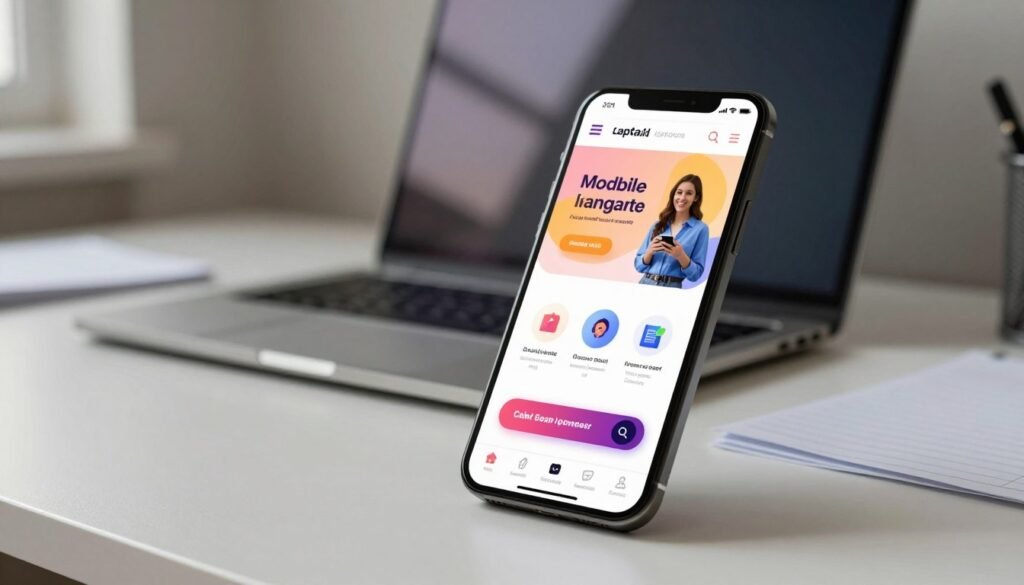
Media is compressed and scripts are trimmed to lower load times on cellular networks. That reduces abandonment and improves conversion rates.
We place buttons inside comfortable thumb zones and avoid tiny text links. Color contrast and readability are checked under varied lighting for accessibility.
Before launch, we test on popular U.S. devices and browsers. We prefer clean code from modern page builders or a reliable landing page builder so iterations stay fast and performant.
Measuring success: analytics that matter
Clear measurement turns guesswork into action. We focus on outcomes that matter—qualified lead generation, booked appointments, and revenue signals—not surface-level vanity metrics.
We define success by events: form submissions, phone calls, and confirmed bookings. Each event is tracked so the data ties directly to business goals.
We monitor conversion rates and compare them across channels. When a traffic landing source underperforms, the numbers tell us if the issue is targeting, creative, or UX.
We also watch bounce rate, average time on page, and scroll depth to diagnose message mismatch or slow load. Organic results from search engines need investment and useful content; analytics reveal whether rankings translate into real leads.
Reports include channel breakdowns—paid search, social media, and email—and down-funnel signals from your CRM to measure lead quality and revenue impact.
Finally, we build dashboards and annotate campaign changes so teams act fast. Insights feed the next round of creative, targeting, and iterative tests to improve results over time.
SEO for Landing Pages without sacrificing conversions
Smart search optimization brings qualified prospects to a focused offer and keeps the path to contact frictionless.
We follow SEO best practices while protecting the conversion funnel. That means targeting long-tail queries tied to service + city + intent and using a landing page template built to convert.
Speed matters. We optimize images, trim scripts, and use lean code so both search engines and humans see a fast, usable experience.
To earn authority, we create useful resources—guides, checklists, and calculators—that attract backlinks and point to your conversion path.
Metadata stays accurate and the headline echoes the title users clicked. This reduces pogo-sticking and improves relevance signals.
CTAs are visible and repeated logically. We add schema where relevant, keep internal links from content hubs, and ensure crawlers can parse the action while visitors always see the next step.
Finally, we build on a page builder with clean markup for fast updates and align SEO work to your broader marketing strategy so bottom-funnel pages drive measurable pipeline.
How X3 Agency builds Landing Pages that turn traffic into clients
We design focused conversion experiences that turn targeted traffic into booked consults and qualified leads for U.S. service providers. Our work helps law firms, clinics, home services, and design firms convert Google Ads, Meta Ads, organic search, and social media visitors into real clients.
We start by clarifying the audience and offer, then pick a proven page template and structure for that service category. Headlines and CTAs are message-matched to your marketing campaigns so the promise in ads and emails stays intact.
Trust matters. We add social proof, credentials, badges, and brief case snippets near the CTA. Lead generation forms stay concise and call tracking routes sales-ready inquiries straight to intake or scheduling.
We deploy via landing page builders or custom stacks for fast load and mobile-first UX. A/B and multivariate tests on creative, copy, and layout drive continuous improvement and lower cost per qualified lead.
Finally, we connect paid search, paid social media, and SEO to dedicated conversion experiences and report on pipeline and cost metrics. Call us at +1 (645) 201-2398 to build a focused destination that scales revenue sustainably across the United States.
Talk to us about your next Landing Page
Let’s set up a conversion-first experience that matches your highest-value traffic. We work with service businesses across the U.S. to create and optimize landing pages that turn clicks into clients.
Share your growth goals and we’ll scope the funnel and initial offers that will move the needle fastest. We’ll review your current traffic mix and show where a focused conversion destination can improve contact rates and cost per lead quickly.
We’ll recommend an initial roadmap—offers, content, trust signals, and a testing cadence—mapped to your service lines and target markets. Then we’ll set timelines, reporting expectations, and what success looks like week to week.
Typical next steps: audit, build, launch, and iterate. We clarify who owns each task and what we need from your team so the project stays on track.
Call us at +1 (645) 201-2398 to discuss goals, or use our easy scheduling link to book time with a strategist this week.
Landing Page
A focused conversion asset turns targeted clicks into measurable business outcomes for service teams.
In short, a landing pages is a single-purpose web page built to convert visitors from ads, email, or search. It removes extra navigation, aligns with pre-click messaging, and centers one clear CTA.
Message and design matching keep momentum from click to contact. When headline, imagery, and offer mirror the ad, visitors trust the experience and move faster toward action.
Trust elements—testimonials, badges, and simple case snippets—cut perceived risk. A concise form strategy asks for essentials first and qualifies later, lowering friction for busy buyers.
Execution ties strategy to metrics. Send channel-specific traffic, instrument analytics, and run A/B tests so improvements are data-driven. We plan, build, and optimize these assets to produce more qualified leads, booked appointments, and lower acquisition costs for U.S. service businesses.
Conclusion
When offers and design align precisely with visitor intent, conversion rates climb steadily. Focused landing pages with one clear CTA reduce distraction and convert ad and email clicks into qualified leads for U.S. service teams.
Our practical path is simple: pick the right format, write clear messaging, include social proof, and keep forms short. Mobile-first performance, fast load times, and clean analytics are nonnegotiable for modern buyers.
We treat testing and measurement as the lever for ongoing gains. Message and design matching across channels cut bounce and raise action rates.
Partner with us to plan, build, and optimize assets that scale. Call +1 (645) 201-2398 to start a data-driven, results-focused collaboration with X3 Agency.