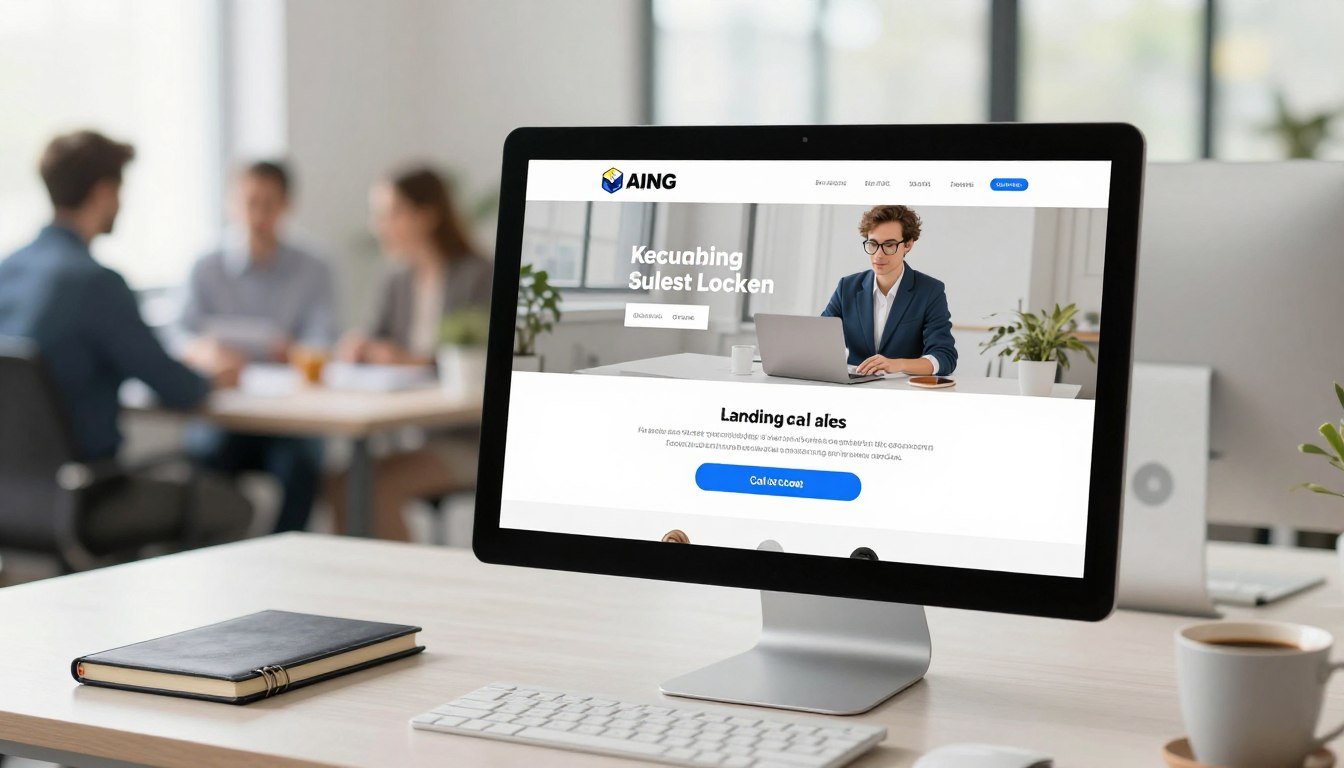
Can a single, focused page turn curious visitors into paying customers faster than a full website can?
We define this kind of page as a single-purpose experience that aligns headline, offer, and call to action into one clear path to action. It removes distractions so users see the benefits, trust signals, and the next step without friction.
Use a short-form version for simple, affordable offers aimed at warm leads. Choose a long-form layout for complex, premium products sold to colder audiences. Both rely on clear headlines, persuasive copy, social proof, and strong CTAs to lift conversions.
We help service businesses across the United States match structure to intent and test continuously so gains compound over time. Learn practical patterns and examples and see how an effective landing page can reduce acquisition costs and increase qualified leads.
Understanding the Sales Landing Page: Definition, Goal, and Intent
A single-purpose web page removes clutter and guides a visitor to act.
We define a landing page as a standalone webpage built for a marketing campaign with one clear goal: lead capture or conversion. Everything on the page — headline, subheadline, copy, visuals, and cta — directs users toward that one action.
Core elements include a direct headline that states the benefits, a short subheadline for context, persuasive copy tailored to local service needs, and a clear cta that tells visitors exactly what to do.
Social proof and trust signals — ratings, testimonials, and guarantees — reduce skepticism and lift conversions. Minimal forms gather only essential information so we preserve lead quality while cutting friction.
We align the page intent to campaign targeting so the visitor’s expectations match the offer. Then we use data and A/B testing on headlines, images, and CTAs to learn what raises conversion rates.
For U.S. service businesses, a sales-focused landing often maps to a booked consult, deposit, or call request. When structure and intent match, pages generate more consistent, high-quality leads.
Sales Landing Page vs. General Landing Page: What’s the Difference and Why It Matters
A targeted conversion experience asks for a commitment, and that single aim shapes every element on the page.
We contrast a sales-focused page, which asks for a purchase or paid booking, with a general landing page that might collect emails or deliver a resource. Sales pages run long when offers are complex; they include pricing, guarantees, scarcity, and detailed benefits to close users who need more information.
General landing designs favor brevity for quick opt-ins. They rely on a tight headline, simple form, and a clear CTA to capture leads for later nurturing.
Mixing goals confuses visitors and dilutes attention. We keep the objective singular, align copy and visuals, and remove navigation to prevent leaks. Social proof and trust elements matter in both types but carry extra weight when the ask is monetary.
Use short tests and proven examples—countdowns, plan grids, and bold CTAs—to see which format converts best for U.S. service businesses.
When a Sales Landing Page Works Best for Service Businesses in the United States
Complex offers win when we give visitors a guided experience that answers questions and builds trust.
For U.S. law firms, medical providers, home service pros, and engineering or architecture practices, a long-form sales landing page is ideal when buyers need time to decide. It lays out benefits, pricing options, FAQs, guarantees, and case studies that reduce perceived risk.
Short-form sales landing pages work better for quick, low-cost services where users are already warm. Examples include emergency dispatch fees or limited-time consults from search or retargeting traffic.
We emphasize trust badges, customer testimonials, and local credentials to match regional rules and buyer expectations. Removing navigation, limiting fields, and optimizing load speed raise conversions. We also run data-driven tests to pick format and length that lower acquisition costs.
When urgency matters, we prioritize phone-first CTAs and speed. For elective offers, we focus on education and visual proof. This approach produces more qualified leads and predictable growth across the United States.
Essential Elements That Drive Conversions on a Sales Landing Page
High-converting pages reduce doubt quickly by showing benefit, proof, and an obvious next step.
Start with a sharp headline and short subheadline that state the core promise and benefits. Follow with concise copy that maps each point to a customer pain and the outcome they can expect.
Place a visible CTA above the fold and repeat it as the reader moves down the page. Make the action explicit so users know exactly what will happen when they click.
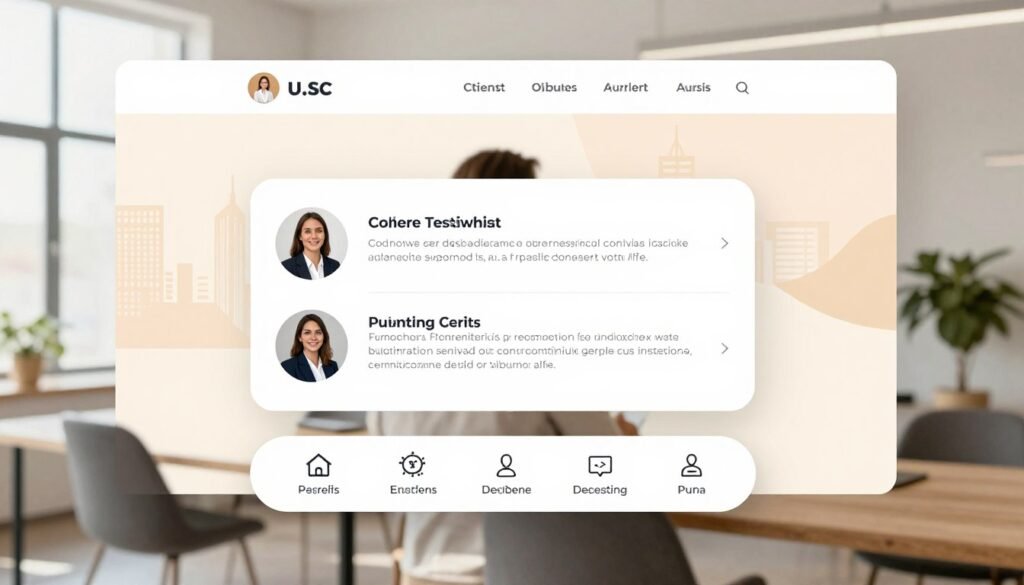
Use social proof—ratings, testimonials, and logo strips—near moments of objection to provide quick proof. Present pricing and package comparisons in simple, benefit-forward bullets and add risk-reversal like satisfaction guarantees.
Include clear images or diagrams that explain the service process or show before-and-after results. Keep forms short and offer phone or chat alternatives for immediate contact.
Design for readability: white space, contrast, and short sections guide attention toward the CTA. Test headlines, CTA language, and benefit order to find what lifts conversions most.
Learn more about our approach on about our team and how we build conversion-ready landing pages for U.S. service providers.
Design and UX Best Practices That Keep Visitors Focused on Action
Good design trims choices so visitors move from curiosity to a single next step without hesitation.
We build mobile-first templates that load fast and place the most important info near the top. Buttons are thumb-friendly and forms ask only for essentials so users complete the task without friction.
Use contrast, hierarchy, and ample white space to draw attention to the primary cta. Remove navigation and non-essential links so visitors stay on-path toward booking, calling, or paying a deposit.
Optimize images for clarity and size, enable caching, and limit redirects to cut load time. Pick purposeful visuals that show process or outcomes, not generic shots, to build trust near points of friction.
Choose a reliable builder and proven page template to speed iterations and run built-in tests. Then validate with analytics and session replays to find sticking points and refine microcopy or layout until conversions rise.
Writing Persuasive Copy That Turns Page Visitors into Paying Customers
Strong, focused copy turns casual visitors into motivated customers by answering the core question: what’s in it for me?
We start with a headline that states the promise and a short subheadline that echoes the customer’s problem. Then we empathize in plain language so users feel heard before we describe the solution.
Translate features into benefits readers care about — faster resolution, lower lifetime cost, better outcomes. Present those benefits in short, scannable bullets so attention stays on the result.
Use social proof and real testimonials to provide proof at decision points. Name results and timelines so customers can picture the outcome. Address objections with clear information about process, pricing, timelines, and guarantees.
Clarify the offer: what’s included, who it’s for, how long it takes, and the next step. Keep sentences tight and active, repeat the primary CTA at natural breaks, and test variations of headline, benefit order, and proof to see what converts best for U.S. service businesses.
How to Build a Sales Landing Page Step by Step
Define a realistic conversion goal up front so copy, design, and tracking all work together.
Start by naming one measurable outcome — booked consults or paid deposits — and align every section and CTA to that action. Research your audience and competitors for language and alternatives so your offer stands apart.
Choose a reliable builder with drag-and-drop editing, mobile responsiveness, and analytics integrations. Pick a conversion-proven template or page template that fits your offer complexity, then customize visuals, proof, and microcopy.
Write benefit-led copy, add a direct headline, and place a high-contrast CTA above the fold and at key scroll points. Keep forms minimal and offer phone or chat as fast alternatives for urgent leads.
Configure domain, hosting, and SSL for speed and trust. Integrate Google Analytics and tracking pixels to collect data. QA across devices, test links and forms, then publish and monitor performance.
Get started with A/B tests on headlines, CTAs, and images. Use real data to iterate weekly, shift traffic to winners, and prune what hurts conversions. When you’re ready, check landing page examples and page examples to refine your approach and get started on the next section.
Measuring Performance and Running Experiments to Improve Conversions
We measure what matters: bookings, paid consults, and revenue tied to each experiment.
Start by tracking conversion rate, bounce rate, average time on page, and CTR on the primary CTA. Those metrics show whether content and offers resonate with visitors or need reframing.
Set up A/B tests for headlines, hero images, CTAs, form fields, and pricing layouts. Change one variable at a time so data gives clean insights about what lifts conversion.
Use analytics and event tracking to separate new users from returning user behavior and to attribute results across marketing channels. Test load speed and functionality before traffic ramps up.
Compare device performance to ensure mobile experience matches desktop conversions. Then apply findings to reorder benefits, move proof closer to drop-offs, and reduce form friction.
Maintain a test backlog with hypotheses and expected impact. We align reporting to qualified leads and closed revenue so optimization lowers acquisition costs over time.
How We Help: X3 Agency’s Data-Driven Sales Landing Pages for Real Leads
We build focused conversion experiences that turn targeted traffic into verifiable, qualified leads. Our work centers on measurable outcomes for U.S. service businesses, not vanity metrics.
We design a sales-centric landing strategy matched to offer complexity and buyer intent. Fast, mobile-first pages carry clear benefits, trust elements, and bold CTAs integrated with your CRM and ad platforms.
We run paid and organic marketing—Google Ads, Meta Ads, SEO, and social—to drive steady, qualified leads to your page. Then we measure conversion rate to qualified leads and closed revenue so we lower customer acquisition cost over time.
Proof matters: we prioritize case studies and customer testimonials that speak your industry’s language. For bundled product service offers, we show pricing and packages transparently to speed decisions and build trust.
Our workflow includes rapid A/B testing of headlines, CTAs, and proof placement. You get a clear call to action—“Call Now,” “Book My Consultation,” or “Pay Deposit”—aligned to your operations and next steps.
Ready to get started? Call us at +1 (645) 201-2398 and we’ll outline a data-driven plan to turn traffic into paying clients.

Conclusion
The clearest route to more customers is a page that removes doubt and nudges visitors to act.
Choose one goal, lead with a strong headline, show clear benefits, and add social proof and guarantees that reduce friction. Use crisp images, short forms, and mobile-first templates so users complete the task fast.
Ship a focused version quickly and iterate: test hero copy, CTA language, and proof placement with A/B experiments and let data guide improvements. Measure conversion and lead quality, not clicks alone.
When you’re ready, we can help U.S. service businesses build a fast, secure company website that converts and scales—see our approach at company website.
.